
5 Anime That Understand Student Pressure Better Than Any Motivational Speaker Ever Could
Quick take
Every motivational speaker has the same advice: "Believe in yourself." But what does that mean at 11 PM when you're staring at a physics chapter you've read four times? Motivational speakers talk at you. Anime talks to you. Haikyuu, Blue Period, Fruits Basket — they show characters actually failing, actually struggling, actually getting back up. Not with a smile. Messily. That's worth watching.
Explore this topic
Article body
5 Anime That Understand Student Pressure Better Than Any Motivational Speaker Ever Could
Every motivational speaker I've ever been forced to sit through at school had the same energy. Loud voice. Aggressive eye contact. Three stories about their own struggle that somehow ended with them owning a BMW. And the advice? "Believe in yourself." "Work hard." "Your dreams are valid."
Theek hai, fine. But what does any of that actually mean at 11 PM when you're staring at a physics chapter you've read four times and still don't understand, while your parents are having a hushed argument in the next room about which college you should be aiming for?
Motivational speakers talk at you. Anime somehow talks to you. The best anime about pressure, failure, and growth doesn't pretend that hard work magically fixes everything. It shows characters breaking down, making wrong calls, losing badly — and then slowly, messily, getting back up. That's not inspiration. That's something closer to the truth.
Haikyuu!! — For When You Feel Like You're Not Talented Enough
mood: "everyone around me is smarter"
Hinata shouldn't be on that court. He goes anyway. That's the whole point.
Shoyo Hinata is not the best volleyball player. He's not even close. He's short in a sport where height matters, untrained in a sport full of prodigies, and playing catch-up from Day 1. The entire premise of Haikyuu!! is watching someone who shouldn't be competing — compete anyway.
But here's what makes it different from every "believe in yourself" speech you've ever sat through: Hinata doesn't win through passion alone. He loses. Constantly, and specifically, and in ways that make you wince. Every loss teaches him exactly what he needs to fix next. No shortcuts. Just the next specific thing.
Kageyama's arc is worth watching just as much. He's the talented one — and completely unable to work with people, which makes his talent almost useless. The show spends four seasons arguing that talent without self-awareness and the ability to handle failure is worth very little. That's a more honest message than anything on an exam hall poster.
"The moment you think of giving up, think of the reason why you held on so long."
When it hits: Not as a quote. After you've just watched a team lose a match they trained six months for. That's when it actually lands.
What it teaches Indian students: Being outranked right now is not a conclusion. It's information about what to fix next. That's actually useful — unlike "believe in yourself."
Shirobako — For When You Have No Idea What Career You Actually Want
mood: "everyone seems to know what they want except me"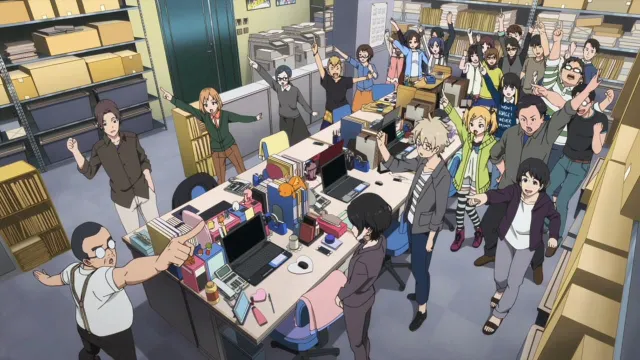
What you imagine the dream job is. What the dream job actually is. Shirobako shows you both.
Shirobako follows five girls who make a promise in high school to one day create an anime together. Then it jumps to them as young adults actually working in the anime industry — and being completely overwhelmed by it.
This is not a success story. It's the most honest depiction of what it actually feels like to be a beginner in a professional environment — the moments where you genuinely don't know what you're doing, where seniors have no patience for your confusion, where the gap between what you imagined the job would be and what it actually is feels impossible to close.
Why does this matter for Indian teens specifically? Because the pressure to know what you want to do starts absurdly early here. Class 10 and everyone wants to know: Science or Commerce? JEE or NEET? And if you say "I don't know yet" — people look at you like you've made a deeply irresponsible life decision.
What it teaches Indian students: The version of a career you imagine at 16 is almost nothing like what the job actually involves. That's not scary — that's just how it works. Give yourself permission to find out without already knowing the answer.
Fruits Basket — For When Family Expectations Feel Like a Cage
mood: "I'm studying for my parents' dream, not mine"
A supernatural curse as a metaphor for generational pressure. It works perfectly.
Fruits Basket is technically about a girl who moves in with a family where members turn into animals from the Chinese zodiac when hugged. That is the premise. It is also completely not what the show is about.
What it's actually about: children who grew up believing they were a burden. Children who were told — directly or indirectly — that their value was conditional on their performance, their obedience, their ability to be what their parents needed them to be. Sound familiar, yaar?
The character of Kyo carries a particular kind of anger that will feel recognisable to any Indian teen who's been told they're "not trying hard enough" by someone who has absolutely no idea how hard they're actually trying. That anger has a very specific shape. Fruits Basket draws it exactly right.
What it teaches Indian students: The expectations on you are real. The pressure is real. But the version of you that your parents have imagined is not the only valid version of you that exists. This show helps you believe that — slowly, and at your own pace.
Blue Period — For When You're Scared to Chase Something You Actually Love
mood: "what if I risk everything and I'm still not good enough?"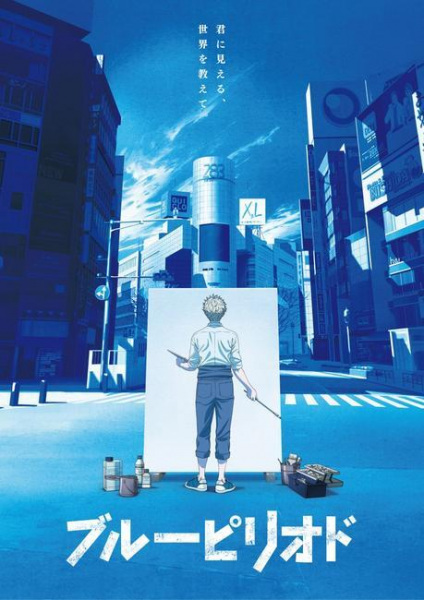
Top grades, no passion. One painting. One terrifying decision. That's where it starts.
Yatora Yaguchi is the student every Indian parent would be proud of. Grades are excellent. Future looks predictable. And he's quietly, completely bored out of his mind.
Then he sees a painting a classmate made. Something about it breaks something open in him. He starts painting — and then makes the single most terrifying decision of his academic life: he's going to try to get into Tokyo University of the Arts, one of the most competitive art schools in Japan, with almost no formal training.
The whole story is about what happens when you attempt something brutally difficult with genuine passion but without any guarantee of success. Yatora doesn't get a magical talent awakening. He gets long hours, repeated failure, the creeping fear that he's made an irreversible mistake, and a very specific loneliness that comes from doing something most people around you don't understand.
The India parallel is exact. Yatora choosing art over the predictable path is the same decision any Indian teen faces when they say they want to study design, film, or writing instead of engineering. The reactions he gets are the same. The internal doubt is the same.
What it teaches Indian students: Passion without skill is not enough. But skill without passion is also not enough. The students who go somewhere interesting are usually the ones who were scared — and did it anyway.
March Comes in Like a Lion — For When You're Just… Exhausted
mood: "I'm still functioning but I feel nothing"
The anime that doesn't try to fix you. It just sits with you. That's rarer than it sounds.
Rei Kiriyama is a professional shogi player at 17. He's also deeply exhausted, almost completely isolated, and going through the motions because stopping feels more terrifying than continuing. He wins matches and feels nothing. He loses matches and feels worse.
This is the hardest anime on this list to watch. It doesn't have Haikyuu's energy or Blue Period's drive. It's quiet, slow, and very accurate about what exhaustion actually looks like — not dramatic-breakdown exhaustion, but the kind where you still go to school, still answer questions in class, still function — and feel absolutely nothing while doing it.
If you've been running on empty through boards prep, through a family situation that's complicated, through the specific loneliness of being surrounded by people and still feeling alone — March Comes in Like a Lion won't give you a solution. But it will make you feel significantly less alone in a way that's almost impossible to explain until you've experienced it.
What it teaches Indian students: Sometimes you don't need motivation. You need permission to be exhausted. This show gives you that. And then, slowly, it shows you what it looks like to find small reasons to keep going — real ones, not the kind you put on a poster.
A note before you close this tab:
Motivational speakers want you to leave the auditorium feeling fired up. The feeling lasts about forty minutes and then the physics chapter is still there.
Good anime wants something different. It wants you to see yourself in a character — really see yourself, flaws and fear and specific kind of tired and all — and watch that character figure something out. Not perfectly. Not quickly. But actually.
Watch one of these five. Doesn't matter which. Start with whichever sounds most like where you are right now.
And if you're in the middle of boards prep and feel guilty about watching — good news. You just read a 1,800-word article. That counts as something.
Quick Picks by Mood
Which one are you watching first?
Drop it in the comments. And if there's another anime that got you through a rough patch — tell us. This list is never really complete.
You don't need a motivational speaker. You need the right story.Comments 0
Keep reading
Similar blogs by topic

You Can Publish a Comic Tonight. For Free.
There's a comic in your head waiting for permission that's never coming. Here's the thing nobody told you: the platforms are open, the button is free, and you can be a published creator this month.

Gachiakuta Won Best New Anime at Crunchyroll 2026 and Indian Fans Haven't Even Started Watching It Yet — Fix That Right Now
Gachiakuta swept Best New Series, Best Character Design, and Best Background Art at Crunchyroll 2026. Here's why Indian anime fans should start watching it now.

Chainsaw Man Just Ended — What the Final Chapter Meant and Why You Should Start Reading It Right Now If You Never Did
A spoiler-light guide to Chainsaw Man's ending, what Part 1 and Part 2 cover, why the fandom split, and where Indian readers can read the complete manga free.